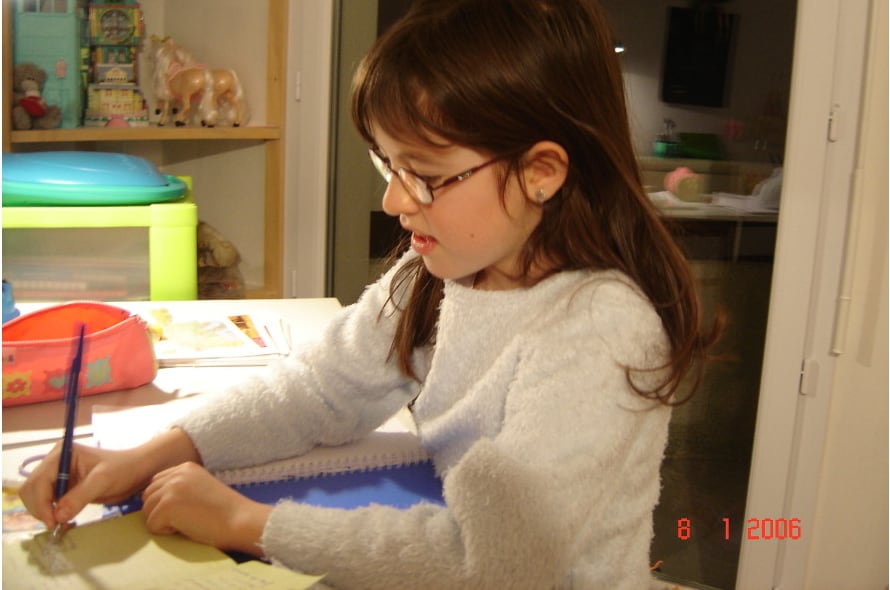
On the ESL help forums, one often sees teachers asking for help teaching one-to-one. Unfortunately, many teachers suffer when teaching children English individually, which is a shame because teaching one-to-one can be very rewarding and often a good source of extra income.
This article is broadly divided into four parts as follows:
1. The importance of making your lessons fun
2. Tips for using one-to-one games
3. Ideas for short plays
4. Added value ideas to enhance your teaching and reputation
1. The Importance of Making your Lessons Fun
By far, the best approach with children for successful one-to-one teaching is to use games and songs. If you want to inspire your pupil and have them want to come to your lessons instead of being forced to go by mummy, you have to make the lessons fun. One of the tricks is having a substantial library of games that work for one-on-one teaching. Another bonus is to have a strong sense of fun and be prepared to join in the games.
If you teach using games, children will love your private classes, and their parents will appreciate your results. A bi-product of this successful combination is to establish a link between enjoyment and learning, enhancing the rest of that child’s whole life.
2. Tips for Using One-to-One Games
Here are some ideas to use games successfully when teaching one-to-one. Most games need more than one player, so you often need to join in and play too. You could say, “well, then I’d just win all the time,” and that can be true. So if you are playing a game that is not just pure luck, where you would generally win all the time, you can do things like this:
– Give your pupil a head start of 10 to 30 seconds.
– Make your task harder.
– Double the task you complete in the time your pupil completes it once.
– Award your pupil three points to your one.
– Award your pupil ten bonus points at the start of the game.
– Lose deliberately by being slow (but pretend to hurry), or ‘accidentally’ drop your pen.
Stopwatch
Another way of adding an element of fun to a one-to-one lesson is to use a stopwatch or timer to add excitement. A timer allows your pupils to race against themselves rather than constantly competing or playing against you. Time your pupil each round and see if they can beat their previous time.
You can also use the stopwatch to give a time limit to an activity, aiming to allow just enough time to complete it. A timed challenge can stimulate a pupil rather than working methodically through an exercise. Oven timers that tick and have a bell that goes off after the given time is up are also good. Your pupil must complete the task before the bell goes off. Substitutes for an oven timer could be an alarm clock, a wind-up musical box, or an egg timer.
Bells
Bells you find on hotel reception desks are also fun. Students race to tap the bell when they have their answer. Of course, using a bell is more effective when you have two or more students but is still an added fun element for the younger children, even in one-to-one lessons.
Sensitivity
And finally, always be sensitive: be careful that one person does not lose all the time. Additionally, only use competition if you see that it enhances the mood rather than causes unnecessary tension or a loss of morale. With children between the ages of 3 and 6, any form of competition is best avoided.
You can play the game or use the timer as usual, but make sure that you play until the end, so everyone wins – not just the person who finishes first. Also, with the timer idea, the child must complete before the time is up – even if you have to extend that time indefinitely. If a young child does not finish in the required time, it upsets them, and they will probably cry – and that is not the aim of the game. Instead, you want the child to succeed so that they feel great about learning English.
Video demo
Visit this link for free one to one games and a video: Free video of one to one games here!
-
Sale!
 ESL Tutoring
Teach Your Child English
Rated 0 out of 5€19.97Original price was: €19.97.€15.33Current price is: €15.33. Add to cart -
-
Sale!ESL Tutoring
Fun ESL Role-plays and Skits for Children
Rated 0 out of 5€19.97Original price was: €19.97.€15.33Current price is: €15.33. Add to cart
Teaching one-to-one testimonial
“I could write you miles and miles of compliments, but I think there is only one word rich enough to express my full gratitude: THANK YOU! I started today with the younger girl and was very surprised. She managed to stay concentrated for more than half an hour, which is fantastic for a person with dyslexia. THANK YOU FROM ALL MY HEART!”
Savinka Geratic, Slovenia, using ‘Teach Your Child English’ by Shelley Ann Vernon. Paperback & Kindle or Download
3. Ideas for Short Plays
Teaching one-to-one is immensely rewarding, as progress can be fast. Putting on short plays with your student in front of their parents or friends is also a winning activity. Children love to be the centre of attention and show off what they have learned. I have 30 simple repetitive scripts with basic English and a fun twist. These role-plays will give your pupil a great deal of pleasure and so they will be happy to rehearse and perform. Additionally, parents will be so impressed with your results that they will be sure to keep sending their child to the lessons.
Play example
An example role-play from my book of skits is the ‘Best Restaurant.’ In this play, the client calls the waiter, who fails to come to the table. The client has to call for them repeatedly, becoming more and more exasperated. Eventually, the waiter arrives and asks for the order. The client gives the order, and the waiter repeats it back, but incorrectly. So, the client repeats their order, but the waiter still gets it wrong. Eventually, the waiter understands the order correctly and fetches the food. When the waiter returns, there is a bug, a worm, or a giant bogey in the soup! It’s very immature, I know, but kids love it!
You can give the child a plastic fly swat as a prop that they have hidden on their knee until this moment. They then start swatting away on the table and asking for the bill (as they will not eat there). When the waiter walks off to get the bill, the child sneaks off without paying. When the waiter returns, they look everywhere for the client and finally run out of the restaurant.
Success with role-plays
The secret to making a short play work is that you use the same language, exactly, each time, with no variations. That way, you can wrap this play up with complete beginners in a few sessions, rehearsing for 10 minutes during each session. First, introduce the language in the play using games, then gradually introduce the script, one section at a time. Each time you see your child, run through the play a couple of times, adding a bit on each time. Then at the end of each term, you can perform it.
I recommend a bare minimum of props because the children will waste time preparing them if you use too many. Kids take all this quite seriously, you see! However, if you can have a couple of props, like a tray and a tea towel for the waiter and a fly swat for the client, that goes a long way in the child’s imagination. Use something like an A4 flashcard or some stiff card if you do not have a tray. Then on the day of the performance, you can always bring in a genuine tray or ask the parents to bring one.
Teaching one-to-one added value
Enhance your teaching reputation by providing added value outside of class time. To help your protégé as much as possible, lend or recommend films to watch for homework, such as Spiderman, Batman, King Kong, or Cinderella and Walt Disney movies – all in English with NO subtitles. Your pupils will watch these willingly and absorb language subconsciously, even if they cannot initially understand the dialogues.
If you are thinking about the cost of buying videos, then take heart because you can find cheap second-hand DVDs. Over time you can build up a library of these for your teaching purposes. If you are lending DVDs rather than streaming downloads, then consider taking a deposit on the loan of your material to ensure its return.
You could also build a library of comic books to read for homework. Of course, you would not expect your student to understand everything, but the subconscious will be learning all the time.
The combination of giving fun classes with games, getting results, and offering extra services such as a video or comic library, will set you apart from your colleagues, and be sure to get lots of recommendations from parents to you for private classes.
Summary
In summary, an outstanding one-to-one teacher uses games to teach English. Each term, they put on a show for parents to applaud their child, see how well they are doing, and give the pupil a chance to show off and feel proud. Games, plays, and songs are all things children love. As an add-on to your exceptional teaching skills, you can also offer recommendations or loan English films or comics for even faster progress.
Buy Teach Your Child English in paperback or Kindle, or in download.
Three great resources for teaching one-to-one
-
Sale!ESL Tutoring
Teach Your Child English
Rated 0 out of 5€19.97Original price was: €19.97.€15.33Current price is: €15.33. Add to cart -
-
Sale!ESL Tutoring
Fun ESL Role-plays and Skits for Children
Rated 0 out of 5€19.97Original price was: €19.97.€15.33Current price is: €15.33. Add to cart
1 thought on “Teaching one-to-one”
That’s what I was looking for. It’s amazing. GB.!