
What is the difference between EFL vs ESL learners? An EFL learner is learning English but does not live in an English-speaking country, while an ESL learner does live in an English-speaking country. However, both have a lot in common and benefit from using games in the classroom. Yet, sensitivity to each group’s circumstances and goals is essential when selecting and presenting the games.
EFL Learners
EFL learners will generally have similar backgrounds but varied motivations. Usually, they are stable regarding residence and schedules, as well as being literate in their first language. They may be learning English as a foreign language for a hobby or work. Aside from those studying for academic requirements. Consequently, there is often less emphasis on writing and literacy and more on verbal communication. That said, Academic EFL students will often want to focus on tests and test practice. Therefore, when selecting games for EFL classes, select them according to students’ interests.
Exams
For EFL learners taking exams, first check if the test has a speaking component. If it does, games can be beneficial in preparing for this. However, if speaking is not tested in the exam, focus instead on English games that support listening, skimming, reading, and writing skills. Indeed, these students genuinely enjoy language games relevant to their exam prep and offer a break from the drudgery. For example, quiz and trivia games based on English vocabulary and grammar rules are excellent ways to work on exam topics. And simultaneously, they inject fun into the class.
Skeptics
EFL vs ESL learners – Occasionally both EFL and ESL learners may pin you down on how a game helps them prepare for a test. So, it is a good idea to have an answer ready. For instance, here is an incident with a European University student: A particular German student was offended at the idea of playing games during class time. However, she accepted the games when she saw the questions and realized that these were in her test books. Furthermore, she even became enthusiastic about the weekly quiz competitions. From a skeptical start she went on to pass her Cambridge exams with flying colours!
Fun learning
For those who study English as a hobby, or conversational English, almost any speaking or listening game will be of interest. For instance, rhythmic chants, songs, and rhyming games are helpful and fun. To also work in some reading and writing painlessly play build-a-sentence or build-a-story games. And then have students write up the sentence or story they have just composed.
Resources
175 English Language Games for teens and adults has activities for both EFL and ESL learners.
Business English
Business students will appreciate games as a relief from the grind of daily work. However, you will have the greatest success if you connect them to the goals of their course. Therefore, work with business situations where students hope to use their English.
In addition, role-plays and skits can be helpful with advanced business students since they sometimes bring out unexpected cross-cultural communication issues. For instance, a Japanese student taking part in a mock board meeting once stopped the game in the middle because he couldn’t believe it accurately portrayed an actual situation. The dynamics of business meetings in the U.S. and Japan were so different that this student couldn’t believe it. Fortunately, a colleague stationed at an American branch of the company reassured him that the role-play was true to a U.S. style of business meeting. Later, this role-play was one of the most highly rated parts of the training seminar.
ESL Learners
ESL classes are often culturally diverse compared to EFL groups. The economic resources of ESL learners are often relatively low. Schedules may be problematic due to appointments with immigration, family responsibilities, and long work hours. In addition, ESL students may have come from highly traumatic situations such as fleeing from war, poverty, or persecution. Families may not be complete. Perhaps recent deaths make some topics difficult, or some family members were forced to stay behind due to financial limitations. Work hours may be long and hard. Students will often arrive at class exhausted, especially if it is a night class.
Sensitivity
When selecting games for ESL classes, one must take a broader look at how the students came to be there and what English they need to survive. Games can relieve stress when ESL students come directly into your class from traumatic situations. Gentle games may allow them to laugh and have fun when there may not be much to laugh about in their private lives.
Therefore, be sensitive to your students’ experiences. For instance, avoid family games with refugees from a war zone since you will probably have more than one dissolve into tears or ask to leave the room. That may seem like an extreme example, but it happened to a teacher with a class that turned out to be mainly comprised of Ukrainian refugees.
Even without a war, students with refugee status, or those who have struggled to reach a new country, will often have suffered many hardships. For these students, board games that help with vocabulary and grammar are great ways to start since they don’t require players to touch on emotionally charged issues, and they cover basics that these ESL learners need.
Cultural diversity
Be aware of the variety of cultures in your class and how comfortable they are with each other. You might well have members from each side of a conflict in your room. Fortunately, games can break the ice, relieve tension, and provide structured interaction between students from cultures that don’t traditionally get along. For example, Korean and Chinese students can view Japanese students with hostility. Arab Christians and Muslims can create tension in a class, as can Pakistani and Indian students. These are groups that have long-standing histories of conflict.
Safe games
Therefore, stick to games like “Find someone who…,” board games, and team games like charades and Pictionary at first. These games have clear boundaries and objectives that keep hostility to a minimum while maximizing student interactions. Games with more improvisation, like role-plays, debates, and ‘murder mysteries’ are riskier, so wait until you know your students well before trying one.
Language games can show recently arrived ESL learners that certain activities are acceptable in their new country, where they might not have been in their old one—for instance, mixing genders in the same class or equality of sex.
Conclusion EFL vs ESL learners
Ultimately, both ESL and EFL students want to learn English, and using games will help them achieve these goals with more fun, laughter, and ease than any workbook or lecture ever could. All it takes is a little forethought, a wide variety of games to choose from, and sensitivity to the needs and experiences of the student.
Great resources for EFL and ESL Learners
-
Sale!
 Games
GamesGames and Activities for Teens and Adults
Rated 5.00 out of 5€19.97Original price was: €19.97.€15.33Current price is: €15.33. Add to cart -
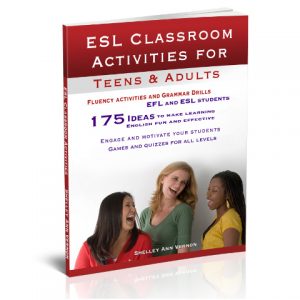
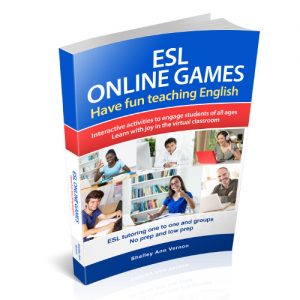
For more help teaching ESL learners, please see this post teaching refugees English.
You will find plenty of activities for EFL vs ESL learners in the two books above.